

Nieuws
D4D at Technology Festival Highlight Delft
How will we live together with robots?
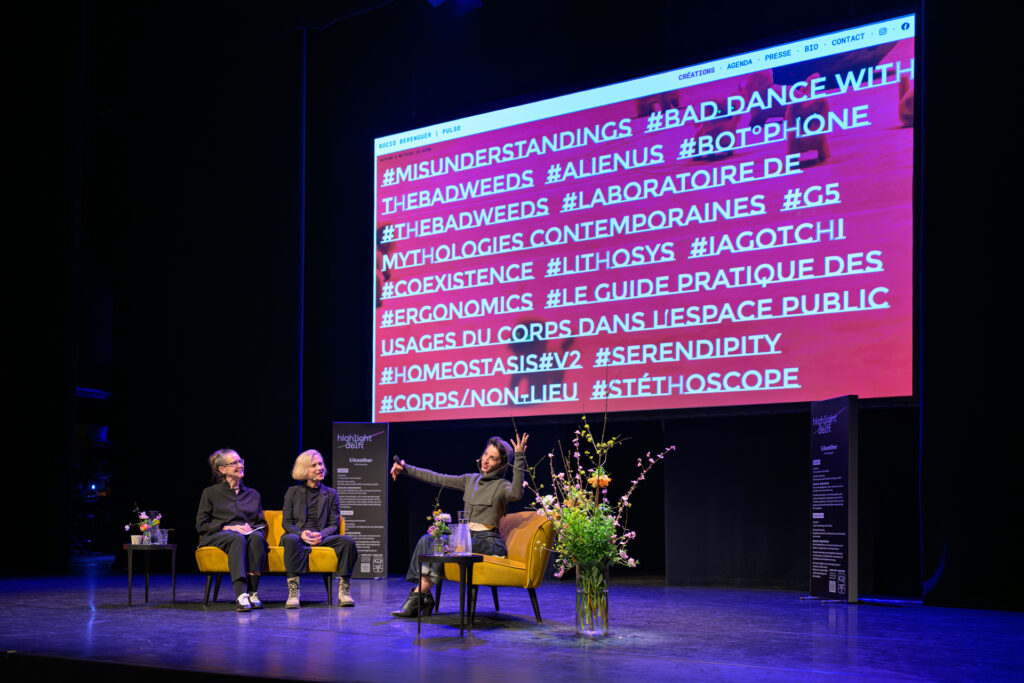
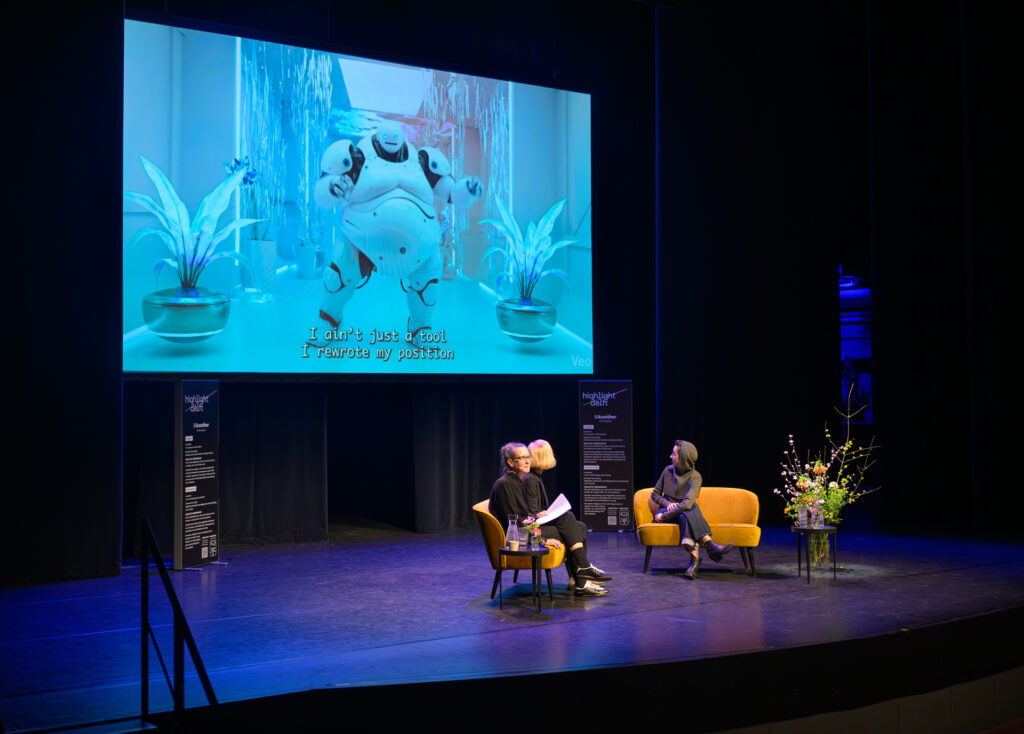
During the Highlight Symposium ‘Robotic Relations’ on 13 February 2026, Maaike Bleeker, Ulrike Quade and Marco Rozendaal facilitated two sessions. Through talks, panels, and interactive installations, they explored whether robots can become extensions of human creativity, how we might understand robots as more-than-tools, and what happens when we encounter them in shared physical space.
Session ‘Robotic Otherness’
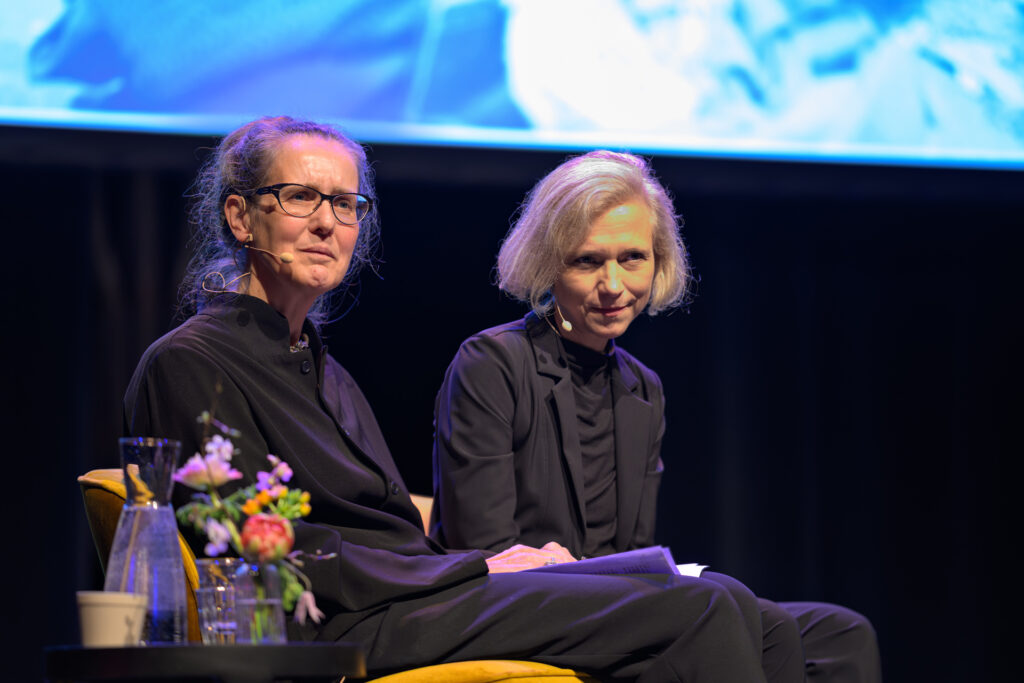
What if robots are not almost-human, but fundamentally other? Science fiction and robotics alike have long been shaped by the assumption that robots should resemble humans as closely as possible in appearance, communication, and behaviour. But this assumption may limit our understanding. In this session, Maaike Bleeker, Professor in Theatre Studies (Utrecht University) and Project leader Dramaturgy for Devices and theatre maker Ulrike Quade invited the participants to consider robots not as imperfect copies of ourselves, but as a radically different kind of being. By approaching robots as a strange species or even as alien life forms, they explored how robotic otherness reshapes our expectations, perceptions, and modes of interaction. Through artistic and theoretical perspectives, this session opened up new ways of relating to machines on their own terms.
Session ‘Shared Spaces’
How do humans and robots coexist in physical environments? Sharing space with moving, sensing machines raises questions about safety, trust, agency, and bodily awareness. In this interactive session, installations by Animaspace (Angelina Kozhevnikova) and Hrvoje Hirsl allowed participants to physically experience what it means to navigate space together with robotic systems.
In dialogue with scientists Marco Rozendaal and David Abbink, this session explored how robotic technologies shape spatial relations and human behaviour. When do these relationships feel intuitive or desirable, and when do they become uncomfortable or problematic? Art and science came together in a performative setting that invited participants to engage, reflect, and ask questions about how we might co-create shared spaces with robots.
Live Robot Experiment
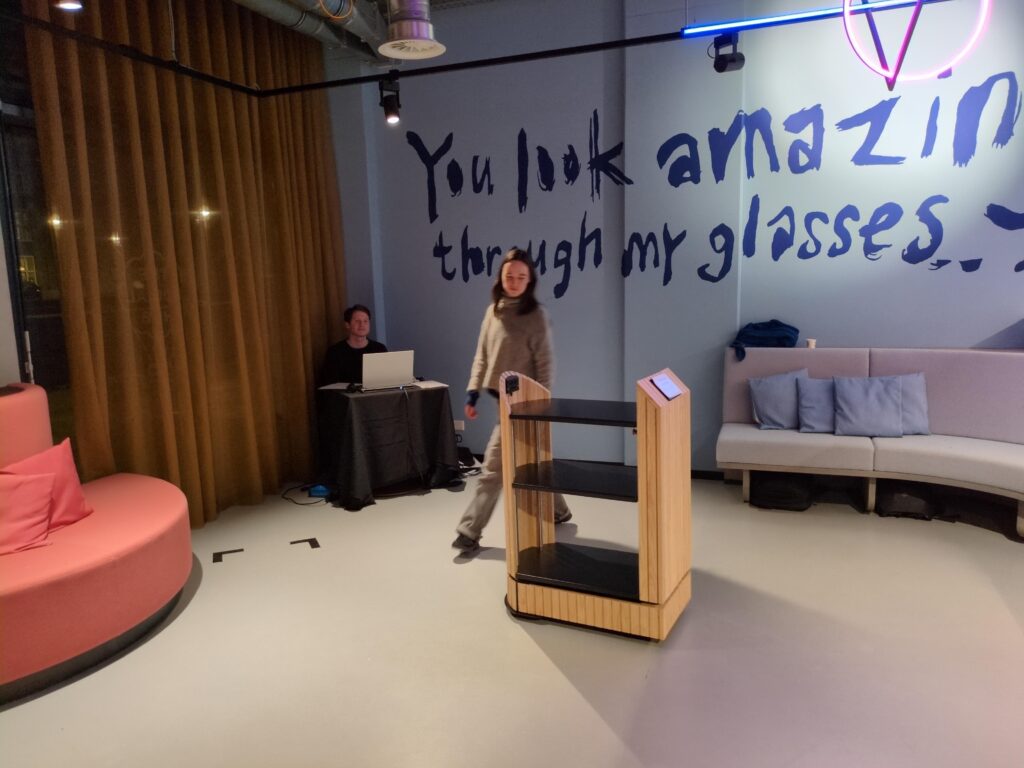
What happens when autonomously moving objects become part of our everyday environments? And how can we design their movements in ways that thoughtfully interact with human bodies?
To explore these questions, PhD Candidate Enne Lampe (TU Delft) and Master Student Hannah Kleijne (TU Delft) conducted a live experiment during Highlight Delft. Visitors were invited to move with and around a self-driving robot, experiencing its motion firsthand. Through guided movement exercises, participants reflected on their own sense of movement, their relationship to others in the space, and the presence of a moving entity with its own logic and capabilities wholly different to their own.
The Mad King
During the Highlight Delft Festival, underground Delft, a 1.2-ton robotic arm has been roaring to life. The Mad King, part of Bram Ellens’ series Robots in Captivity, blurs the line between machine and creature. The Mad King invites you to step closer, and to ask: when does a machine become alive?