
Agenda
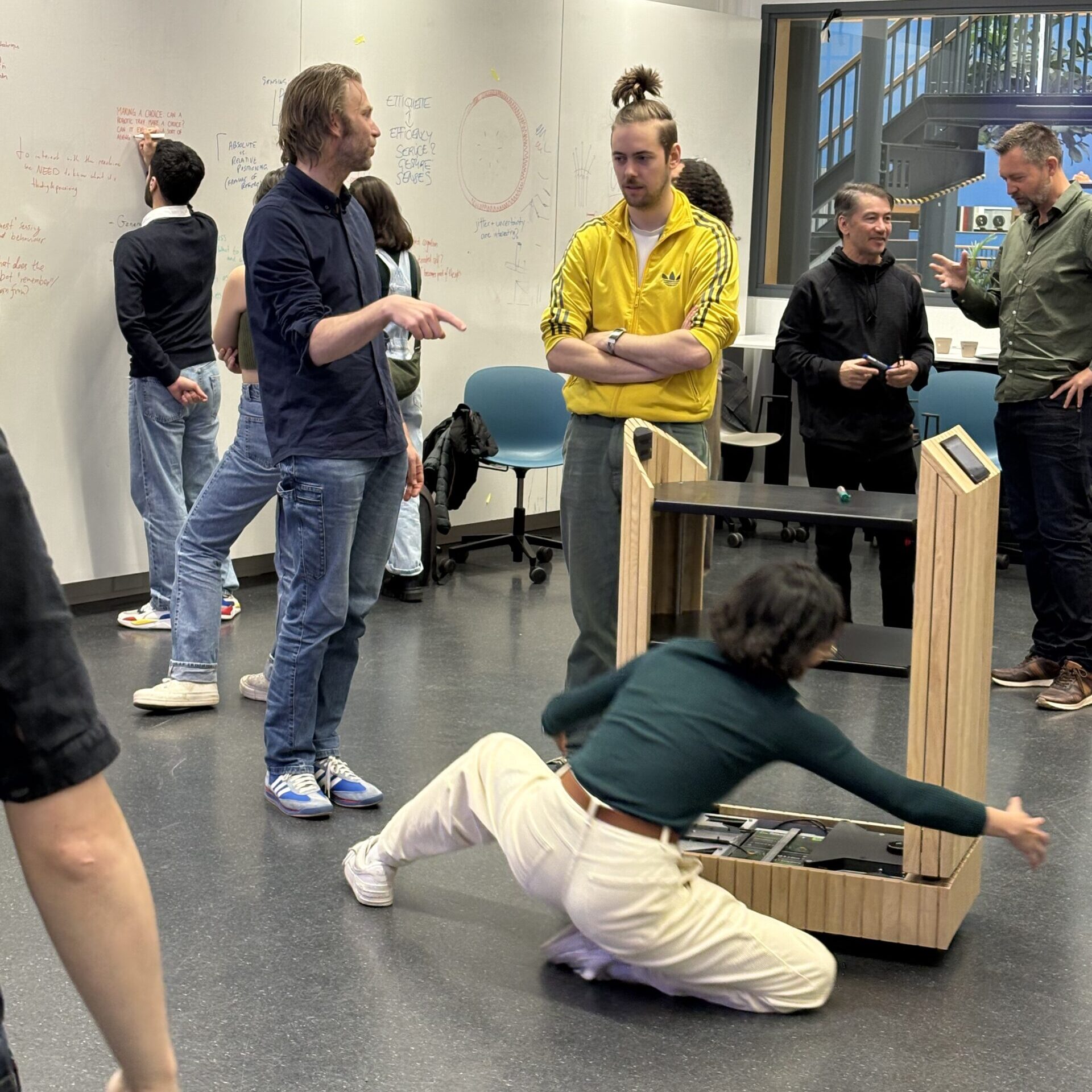
Workshop ‘Countertechnique for Engineers’
How can the knowledge embodied in Anouk van Dijk’s Countertechnique help humans and robots to share the same space without collisions?
We would like to invite you to the workshop Countertechnique for Engineers on Monday 11 May, where we will explore this together with Anouk van Dijk (dancer, choreographer and founder of the Countertechnique), Wilbert Tabone (Postdoc Human-Robot-Interaction, TU Delft) and Enne Lampe (PhD candidate Human-Robot-Interaction, TU Delft) based on two casestudies: Rober and Husky.
Interested to join? Register now by sending an email to j.fraune@uu.nl!
PROGRAM
10.00-10.15h: Welcome
10.15-11.00h: Introduction to Countertechnique by Anouk van Dijk, followed by a discussion with Maaike Bleeker (Professor in Theatre Studies, Utrecht University, project leader D4D) and Marco Rozendaal (Associate Professor in Interaction Design, TU Delft, co-applicant D4D) about the relevance of this movement system for human-robot collaboration
11.00-11.45h: Introduction by Wilbert Tabone of the Husky robot he is currently working on, followed by discussion
11.45-12.30h: Introduction by Enne Lampe of the Rober robot he is currently working on, followed by discussion
12.30-13.15: Wrap up to share observations and draw some conclusions
13.15h: Lunch
About Countertechnique
Countertechnique is the movement system Anouk van Dijk developed during her career as dancer, choreographer and teacher over the last 25 years. It is a system to help dancers think about their bodies. Countertechnique provides tools for body and mind to deal with the demanding dance practice of the 21st century. It is a movement system to help the dancer think about the dancing body, focusing on the process of incorporating information into action.
About the Husky project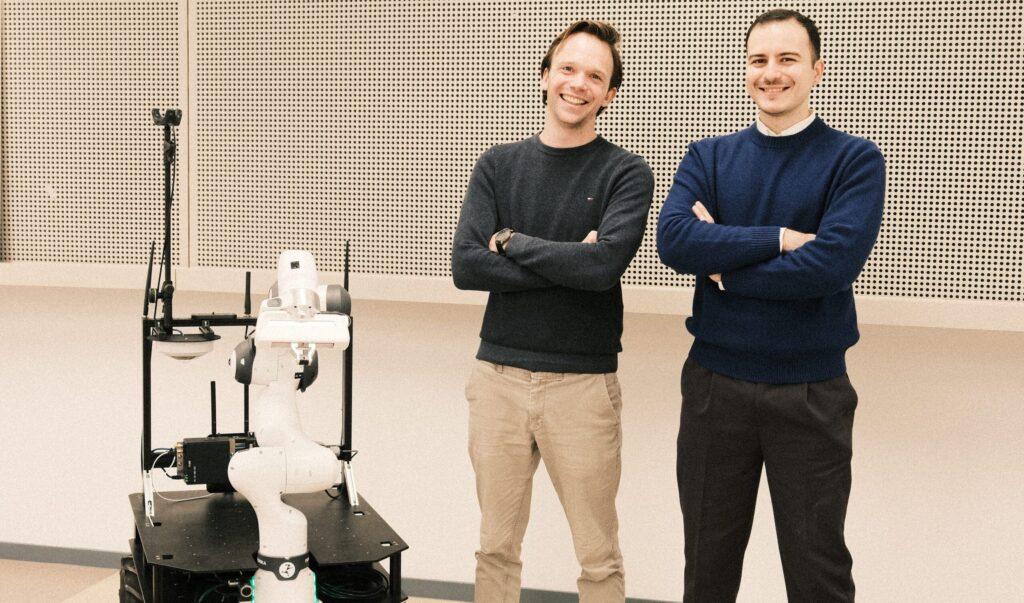
When two pedestrians approach each other on the sidewalk head-on, they sometimes engage in an awkward interaction, both deviating to the same side (repeatedly) to avoid a collision. This phenomenon is known as the sidewalk salsa. Although well known, no existing model describes how this “dance” arises. TU Delft postdocs Wilbert Tabone (Industrial Design Engineering) and Olger Siebinga (Mechanical Engineering) conduct research into how humans and robots can share the same space without collisions.
About the Rober project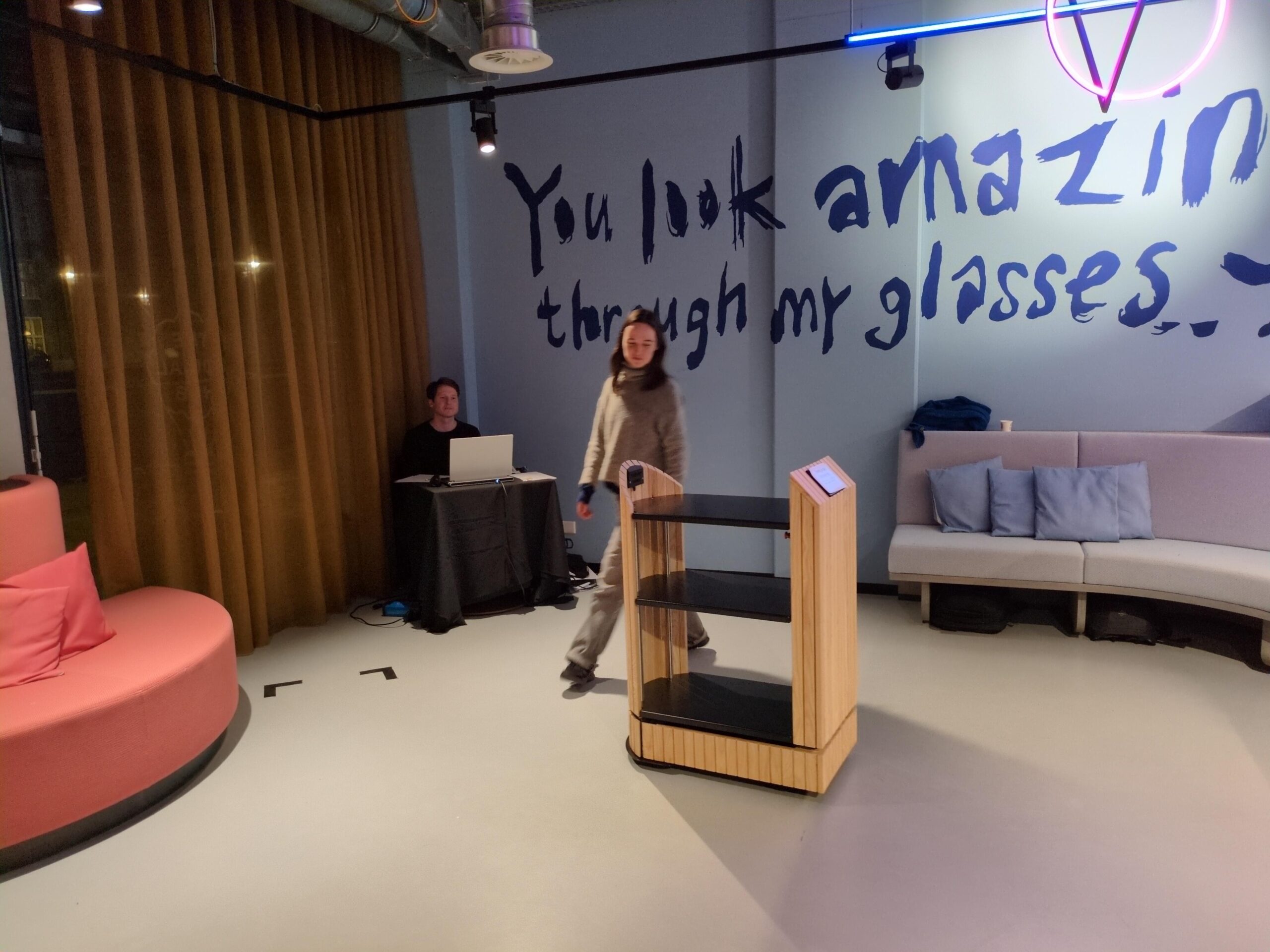
Enne Lampe’s research centers on the idea of a “role.” Just as an actor plays a role, employees within a hotel or restaurant fulfill a role within an organization, and even a robot called Rober can take on a role. What new roles might emerge there that we haven’t seen before? Looking at human movements and how robots respond to them Enne investigates how movement and technology reinforce each other and how to deploy robots in meaningful ways. Tom Dalhuisen, founder of Dalco Robotics, developped Rober as serving robot for the hospitality industry.